How to Determine the Correct Schedule 40 Pipe Thickness
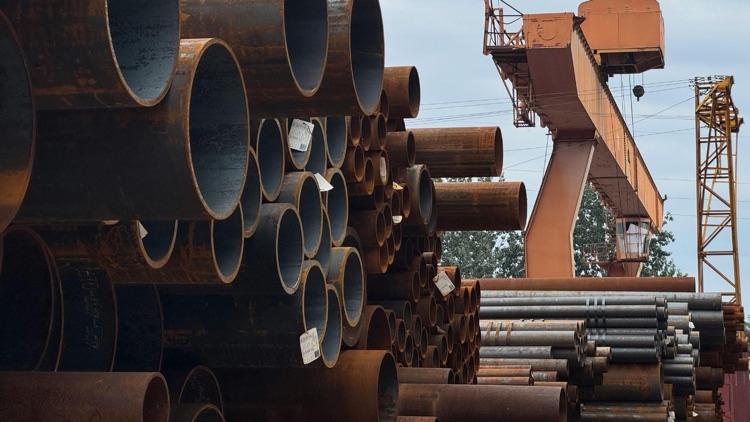
Schedule 40 steel pipe has been one of the most popular specifications in construction, manufacturing, water distribution systems and industrial piping projects. One of the misconceptions is that all Schedule 40 pipes are the same in terms of wall thickness. As a matter of fact, the thickness varies with Nominal Pipe Size (NPS). It is important to know how thick is schedule 40 pipe as it assists in creating security, performance, and adherence to the project specifications. Effective selection also contributes to higher efficiency of the systems, lower maintenance problems, and minimization of the total project costs.
Understanding What Schedule 40 Means
The name Schedule 40 is a standardized classification of the wall thickness of steel pipes. It does not specify the pressure rating of a certain pressure, as well as the wall thickness. Instead, the pipe size combines with the schedule number to establish the actual thickness of the pipe wall.
In simple terms:
- The outer diameter (OD) of the pipe remains fixed for a given size
- The wall thickness changes depending on the schedule number
- As thickness increases, the inner diameter (ID) decreases
As an example, Schedule 40 2-inch and Schedule 40 6-inch have varying wall thickness. This system enables the maintenance of appropriate strength of pipes of various sizes to meet the intended purpose.
Checking the Nominal Pipe Size
The initial process of establishing the appropriate Schedule 40 pipe thickness is to find the nominal pipe size. Nominal pipe size is the common term that is used to describe the size of a pipe as opposed to its actual size. Upon knowing the NPS, engineers and buyers can use a Schedule 40 pipe chart to identify the wall thickness. Changes in thickness are dependent on the size, and thus it is important to use the appropriate NPS to get the right information and prevent selection errors.
Evaluating the Material Grade
The performance of the pipe, as well as its strength, is influenced by the material grade of the pipe. Mechanical properties of common grades like ASTM A53, ASTM A106, and API 5L vary. Although two pipes may be of the same Schedule 40 thickness, they may not have the same pressure capacities due to variations in the strength of the material. Thus, the thickness should always be determined with a review of the material grade since this will guarantee that the pipe will be designed to satisfy the structural and operational needs.
Considering Temperature Conditions
The performance of the pipes can be greatly affected by temperature. Very hot temperatures can weaken the material, and very cold temperatures can have an impact on toughness. Project designers are advised to take into consideration the range of operating temperatures when deciding on the appropriate Schedule 40 pipe thickness. In other cases, it might be necessary to have a heavier wall or an alternate pipe schedule that can ensure safety and reliability at demanding temperatures.
Accounting for Corrosion Allowance
Corrosion is an issue that is prevalent in most piping systems, particularly water, chemical, or other aggressive pipe systems. Corrosion may cause a decrease in the effective thickness of a pipe over time. To overcome this problem, engineers tend to add a corrosion allowance to the pipe specifications. When the system is likely to suffer serious corrosion throughout the service life, they might opt to use a heavier pipe or other protective coating to sustain a long service life.
Reviewing Industry Standards
Schedule 40 pipe dimensions are defined by international standards to ensure consistency and compatibility.
The main standard is:
- ASME B36.10M (for carbon steel pipes)
These standards define:
- Outside diameter (OD)
- Wall thickness
- Dimensional consistency across manufacturers
This ensures pipes, fittings, and flanges from different suppliers can work together without compatibility issues.
Verifying Manufacturing Tolerances
In the manufacturing process, minor differences in wall thickness are acceptable and allowed in standard tolerances. In most applications, the real thickness can be a little less than the nominal.
For critical applications, it is important to verify:
- Mill Test Certificates (MTC)
- Hydrostatic test reports
- Third-party inspection documents
These checks ensure that the supplied pipes meet required specifications and quality standards.
Conclusion
The thickness of a Schedule 40 pipe that should be used is not just a matter of picking a schedule number. It must consider the nominal size of the pipe, operating pressure, grade of the material, temperature, corrosion allowance, and industry standards. With proper consideration of these aspects and reference to good thickness charts, the engineers and purchasers could select the optimal pipe to use in their application. Correct selection contributes to enhanced safety, lower costs, and the performance of the system in the long run.